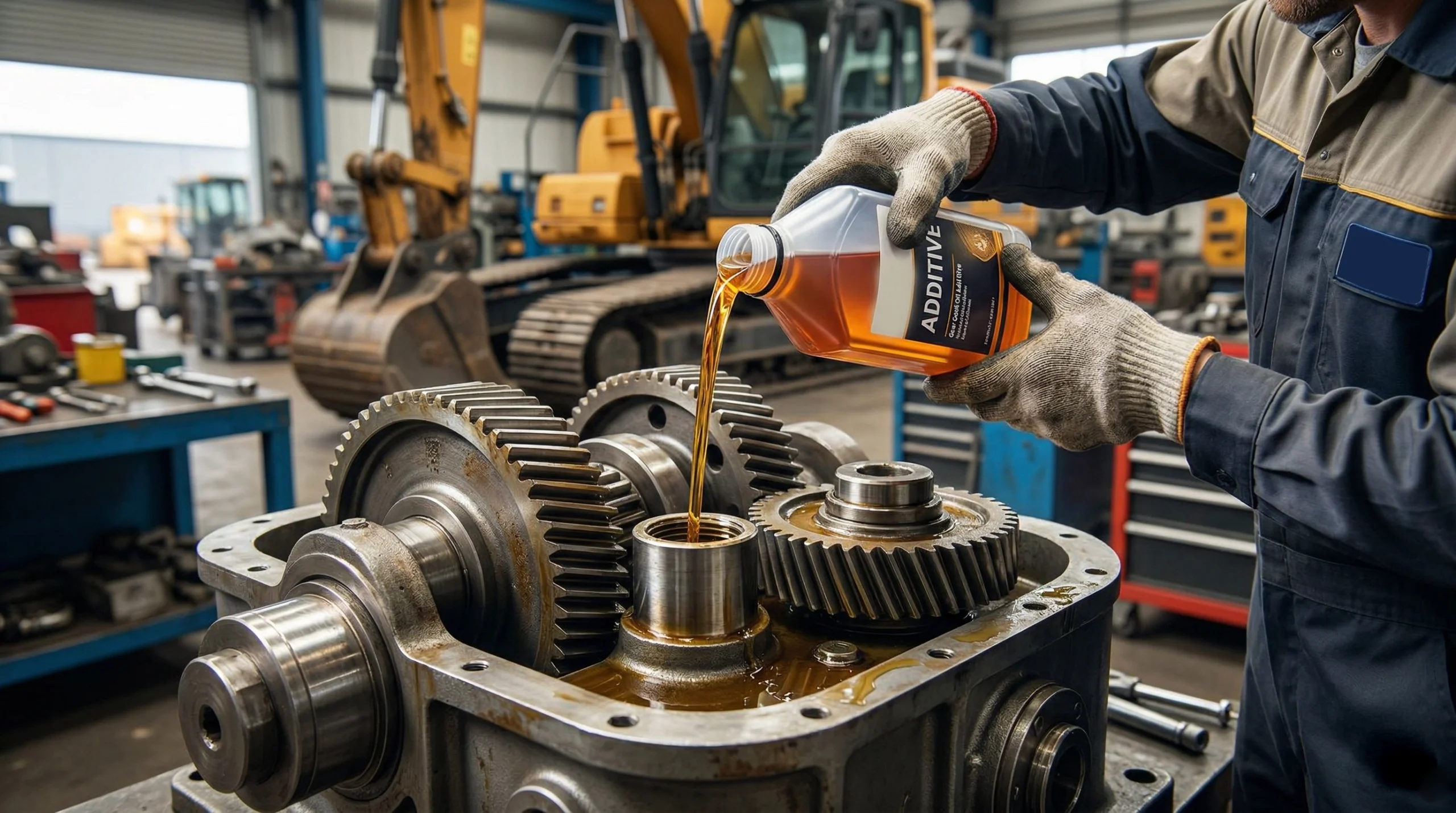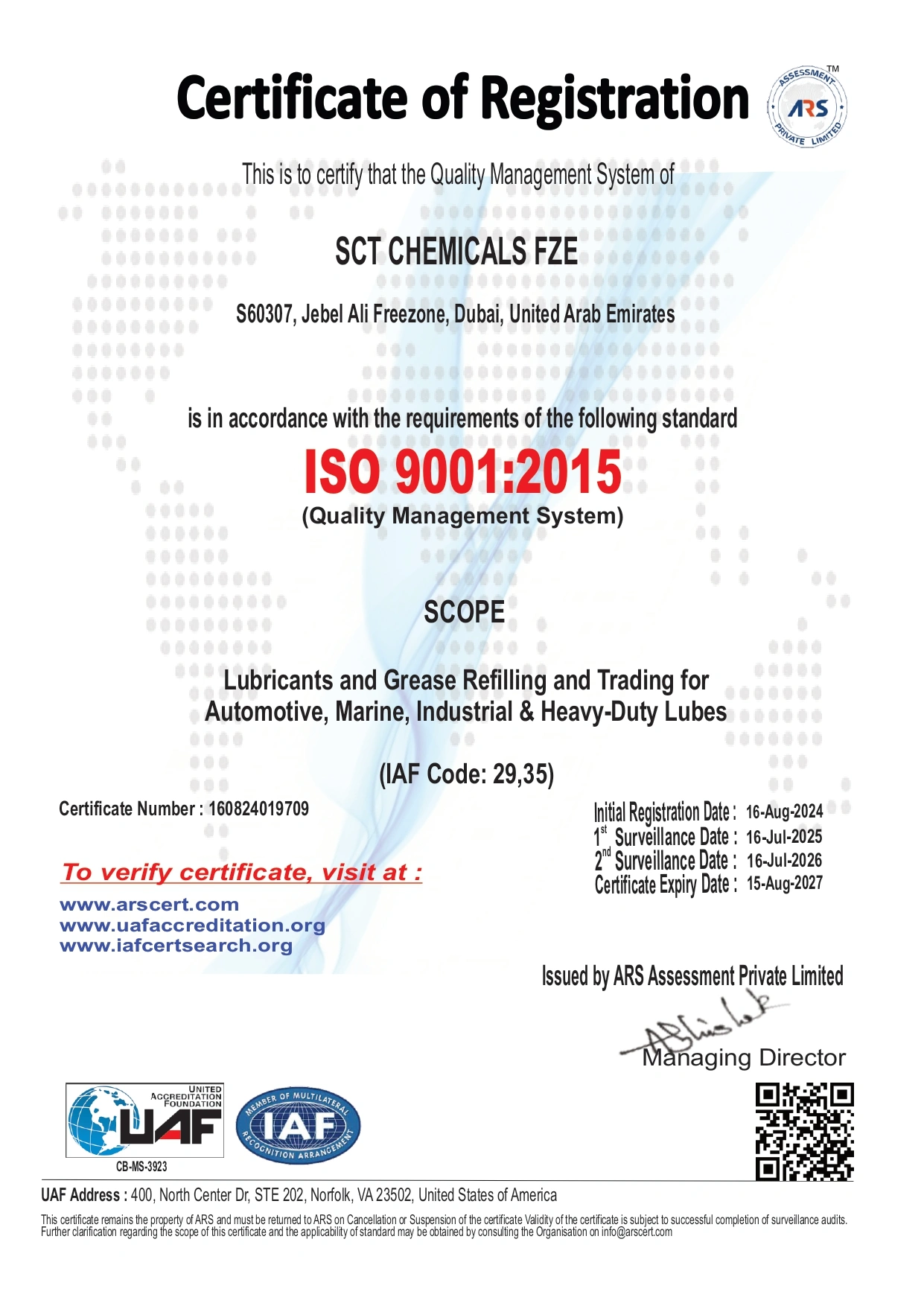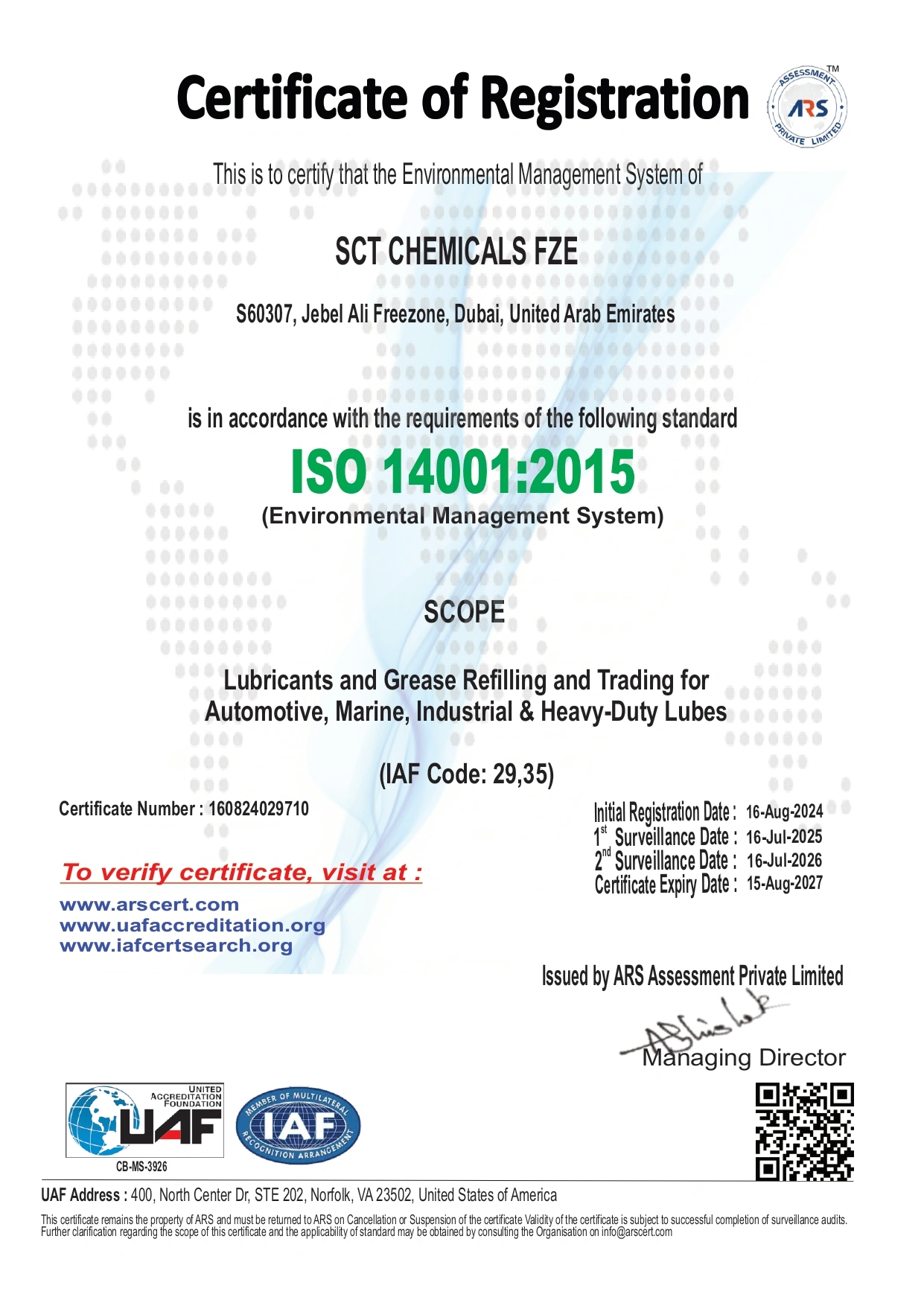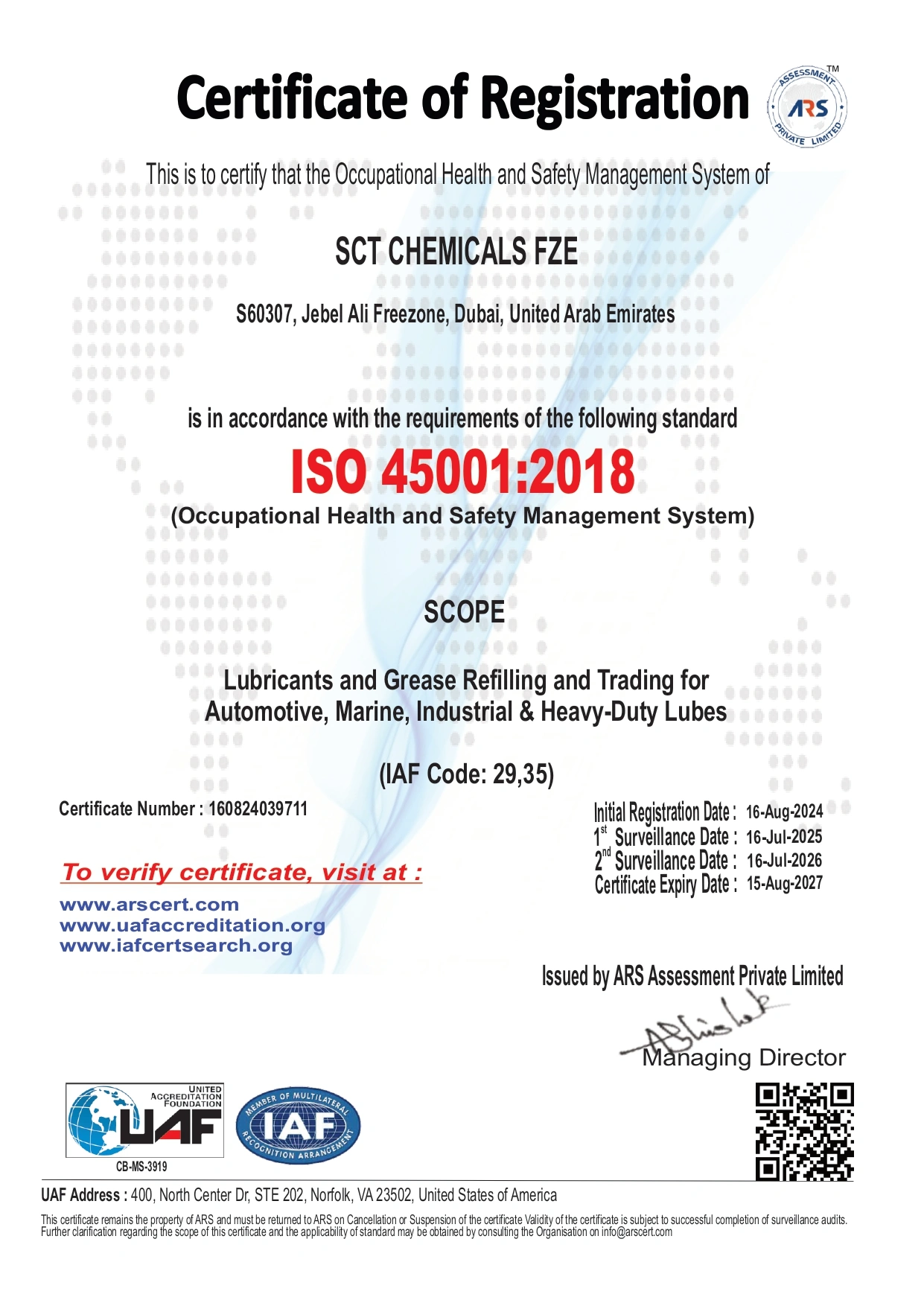




In the rapidly evolving world of additive manufacturing, maintaining lubricant compliance standards is critical for ensuring efficiency, durability, and safety. At SCT Chemicals, we prioritize quality control and regulatory adherence to deliver high-performance lubricants that meet global industry benchmarks. This article explores how SCT Chemicals upholds lubricant compliance standards while optimizing performance in additive manufacturing processes.
Understanding Lubricant Compliance Standards in Additive Manufacturing
Why Compliance Matters
Additive manufacturing (AM) relies heavily on specialized lubricants to minimize friction, reduce wear, and enhance machine longevity. However, not all lubricants meet the stringent lubricant compliance standards required for industrial applications. Non-compliant lubricants can lead to:
- Equipment failure
- Increased maintenance costs
- Safety hazards
- Regulatory penalties
Key Regulatory Frameworks
SCT Chemicals ensures adherence to the following lubricant compliance standards:
- ISO 21469: Certification for lubricant safety in machinery.
- REACH & RoHS: Compliance with hazardous substance restrictions.
- FDA Approval: For lubricants used in food-grade applications.
- OEM Specifications: Meeting manufacturer-specific requirements.
By aligning with these standards, SCT Chemicals guarantees product reliability and operational safety.
How SCT Chemicals Ensures Quality & Compliance
1. Rigorous Testing & Certification
To meet lubricant compliance standards, SCT Chemicals employs:
- Advanced laboratory testing for viscosity, thermal stability, and corrosion resistance.
- Third-party audits to validate compliance with ISO, REACH, and OEM requirements.
- Batch-wise quality checks to ensure consistency.
2. Sustainable & Eco-Friendly Formulations
Environmental regulations are tightening, and SCT Chemicals stays ahead by:
- Using biodegradable base oils.
- Eliminating hazardous additives.
- Complying with global environmental standards.
3. Custom Solutions for Additive Manufacturing
Different AM processes demand unique lubricant properties. SCT Chemicals provides:
- High-temperature lubricants for metal 3D printing.
- Low-friction oils for polymer-based AM.
- Food-grade lubricants for medical & packaging industries.
4. Continuous Improvement & Innovation
Compliance is an ongoing process. SCT Chemicals invests in:
- R&D for next-gen lubricants.
- Real-time performance monitoring.
- Feedback-driven product enhancements.
Benefits of Choosing SCT Chemicals for Additive Manufacturing Lubricants
- Guaranteed Compliance – Meets all lubricant compliance standards.
- Enhanced Equipment Lifespan – Reduces wear & tear.
- Cost Efficiency – Minimizes downtime & maintenance.
- Sustainable Solutions – Eco-friendly & safe formulations.
Case Study: SCT Chemicals in Action
A leading aerospace manufacturer switched to SCT Chemicals’ compliant lubricants, resulting in:
- 30% reduction in machine downtime.
- 20% longer tool life.
- Full compliance with ISO 21469 & REACH.
FAQs
1. What are the key lubricant compliance standards in additive manufacturing?
Key standards include ISO 21469, REACH, RoHS, and FDA approvals, depending on the application.
2. How does SCT Chemicals ensure lubricant quality?
Through rigorous testing, third-party certifications, and continuous R&D.
3. Are SCT Chemicals’ lubricants eco-friendly?
Yes, they use biodegradable formulations and comply with environmental regulations.
Conclusion
In the competitive landscape of additive manufacturing, adhering to lubricant compliance standards is non-negotiable. SCT Chemicals stands out by delivering high-quality, certified, and sustainable lubricants that enhance performance while meeting regulatory demands.
Choose SCT Chemicals for compliant, high-performance lubricants tailored for additive manufacturing.