



Heavy machinery is the backbone of industrial operations, from construction and mining to manufacturing and power generation. However, the immense pressure and friction within industrial gearboxes can lead to premature wear and catastrophic failure if not managed correctly. Choosing the right gear oil additive is not just a maintenance task; it is a critical strategy for extending equipment life and ensuring operational efficiency.
In this industrial lubricant guide, we will explore the essential components of gear oil additives, how they protect your machinery, and how to select the best products for your specific industrial needs.
Understanding the Role of a Gear Oil Additive
A gear oil additive is a chemical compound added to base oils to enhance their performance or provide new properties that the base oil lacks. In heavy machinery, these additives perform several vital functions. They reduce friction, prevent corrosion, and ensure the lubricant maintains its viscosity under extreme temperature fluctuations.
Without the right additives, base oils would oxidize quickly, leading to sludge formation and a loss of lubricating film. For industrial applications, the most common additives include:
- Extreme Pressure (EP) Agents: These react with metal surfaces to form a protective layer that prevents welding and scuffing under heavy loads.
- Anti-Wear (AW) Additives: These provide a thin film that minimizes metal-to-metal contact during normal operating conditions.
- Rust and Oxidation Inhibitors: These protect internal components from moisture and chemical breakdown.
Why You Need an Industrial Lubricant Guide
Navigating the world of lubricants can be complex. Many maintenance managers make the mistake of choosing a lubricant based solely on price or brand name. However, an industrial lubricant guide emphasizes that the “best” oil is the one specifically formulated for your environment and load requirements.
Heavy machinery often operates in “boundary lubrication” conditions, where the oil film is so thin that surface peaks (asperities) can touch. In these moments, the chemical strength of your gear oil additive package determines whether your gears remain pristine or suffer from “pitting” and “spalling.”
Key Criteria for Selecting Gear Oil Additives
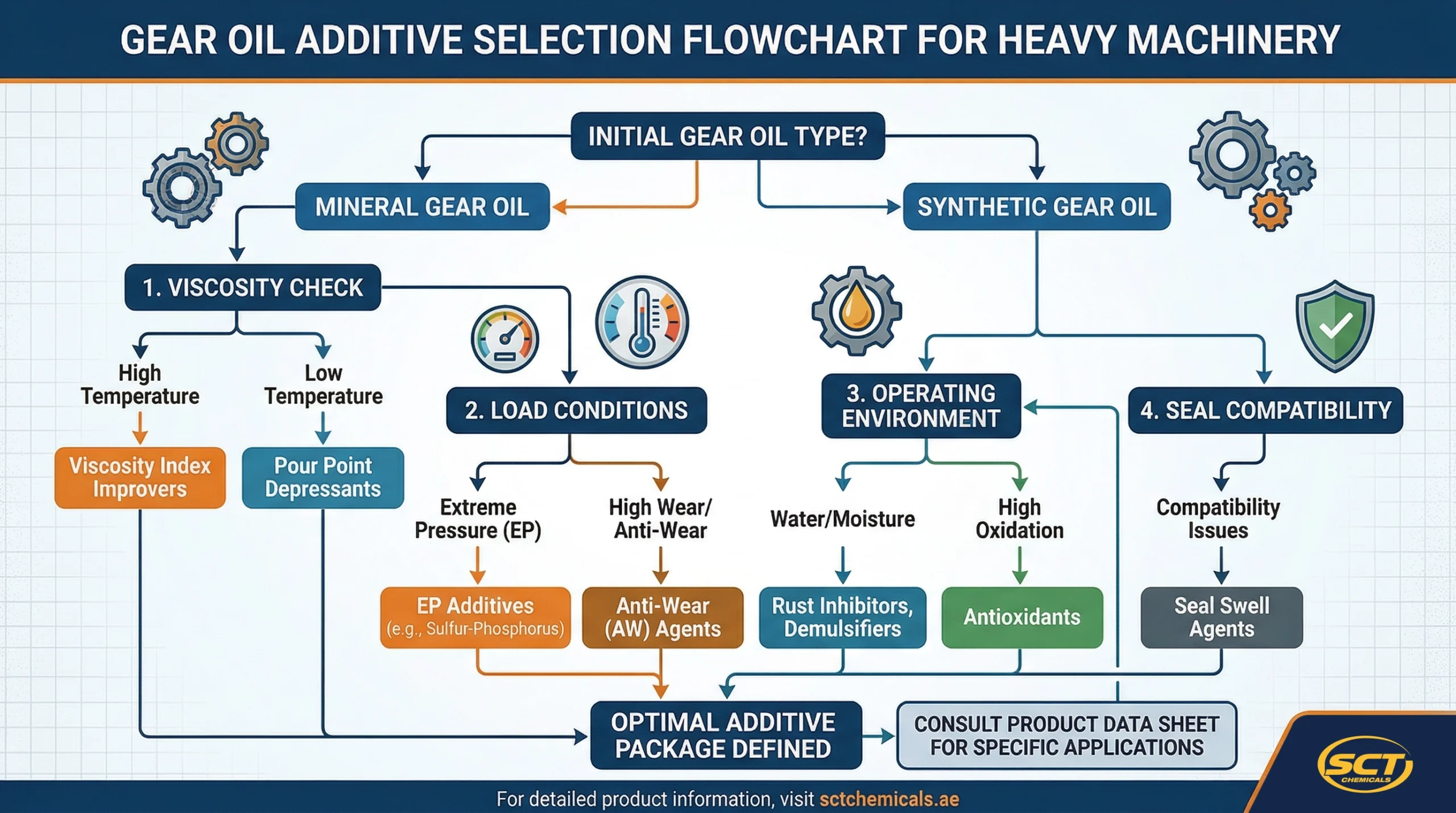
When selecting a lubricant for your fleet or factory, consider the following three factors:
1. Load and Pressure Requirements
If your machinery handles high-torque or shock-loading conditions, look for “Sulfur-Phosphorus” EP additives. These are the gold standard for heavy-duty industrial gearboxes. They chemically react with the gear teeth to create a sacrificial layer, ensuring the metal remains intact even under extreme force.
2. Operating Temperature
Heat is the enemy of lubrication. High temperatures accelerate oxidation, which thickens the oil and creates acidic byproducts. Ensure your gear oil additive includes high-quality antioxidants. Conversely, if you operate in cold climates, pour-point depressants are necessary to ensure the oil flows immediately upon startup.
3. Compatibility with Seals and Metals
Some aggressive EP additives can corrode yellow metals like brass or bronze, which are often used in worm gears or bushings. Always check the “Industrial Lubricant Guide” specifications to ensure the additive package is “yellow metal safe” if your machinery contains these materials.
The Importance of Active Maintenance
Technicians often use the passive voice when describing failures, saying, “The gearbox was damaged.” However, we should use the active voice to describe the solution: Proactive maintenance saves money.
When you monitor your oil health through regular analysis, you can see how the gear oil additive is performing. If the additive levels drop, it is a signal to change the oil before the machinery suffers. Active monitoring prevents the passive acceptance of downtime.
Environmental Considerations in Lubricant Selection
Modern industrial standards now prioritize sustainability. Many companies are moving toward biodegradable gear oils. These formulations use advanced synthetic esters combined with specialized additives to provide the same protection as mineral oils while being less harmful to the environment. When consulting your industrial lubricant guide, look for “Ecolabel” or “Bio-preferred” certifications if your machinery operates near water or sensitive ecosystems.
Conclusion: Maximizing ROI through Better Chemistry
Selecting the right gear oil additive is a balance of chemistry, engineering, and environmental awareness. By following a structured industrial lubricant guide, you ensure that your heavy machinery operates at peak performance, reducing energy consumption and extending the interval between expensive overhauls.
At SCT Chemicals, we specialize in high-performance additives designed for the harshest Middle Eastern industrial environments. Protect your investment today by choosing additives that work as hard as your machinery does.